
WELCOME BONUS 300%
UP TO €2000 + 100
FREE SPINS
UP TO €2000 + 100
FREE SPINS
Home → Blackjack
Blackjack at True-Fortune-Casino: Variants, Rules and Payouts
How long do 100 EUR last at a 1 EUR table?
A 1 EUR bet at a Blackjack table with a 1.85% house edge, such as one featuring 6:5 payouts instead of 3:2, would theoretically see 100 EUR depleted relatively quickly. This specific rule change increases the house advantage by 1.39 percentage points over standard 3:2 payouts. Therefore, 100 EUR placed at 1 EUR per hand would likely not endure for a significant duration of gameplay.
The theoretical RTP for a Blackjack game with a 6:5 payout and a 1.85% house edge is 98.15%. This means, on average, 98.15 EUR would be returned for every 100 EUR wagered over an extended period. If a player makes 100 individual bets of 1 EUR, the expected outcome is a loss of 1.85 EUR.
In practical terms, 100 EUR at a 1 EUR per hand table with a 1.85% house edge might last for approximately 50 to 60 hands before the bankroll is significantly diminished, assuming no winning streaks. This duration is heavily influenced by luck and the specific playing strategy employed.
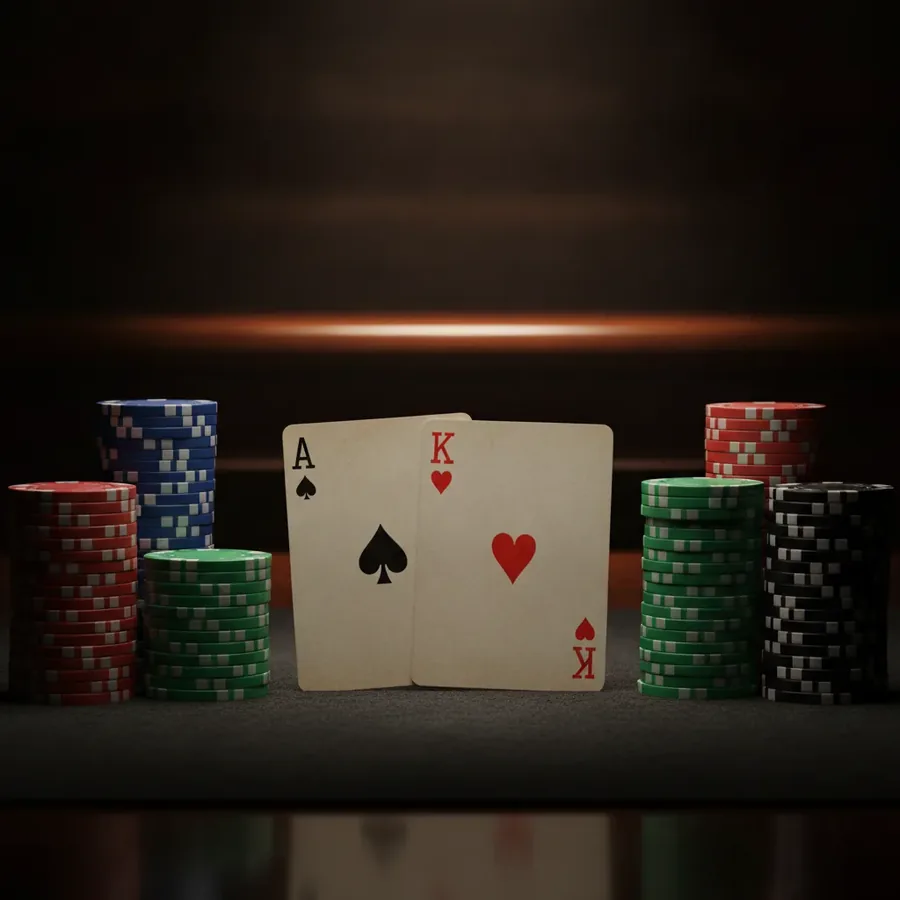
What Push Means: Stake Returns to You
A 'push' in Blackjack occurs when the player's hand total matches the dealer's hand total, excluding a dealer Blackjack against a player 21. In such instances, the player's original stake is not lost but is returned to them. This outcome is neutral for the player's bankroll, neither adding nor subtracting from their funds.
Unlike a loss where the stake is forfeited to the casino, a push signifies a non-result in terms of profit or loss for that specific hand. This is a common occurrence in Blackjack, especially when considering the varied outcomes of different hands played. The payout for a push is essentially 1:1 of the stake.
For example, if a player bets 10 EUR and achieves a push against the dealer, their 10 EUR stake is returned, and no additional winnings are awarded. This contrasts with winning hands, which pay out according to the game's specific rules, such as 3:2 or 6:5 for a natural Blackjack.
Which rule variants does the software show?
True Fortune Casino's software offers a range of Blackjack variants, including games with a 6:5 payout instead of the traditional 3:2, which increases the house edge by 1.39%. Players can also find options with Late Surrender, a rule where players can forfeit half their stake after the dealer checks for Blackjack, reducing the house advantage by approximately 0.08%.
The casino also features Blackjack Insurance, a side bet with a high house edge of 7.47% in 6-8 deck games, which is generally advised against by basic strategy unless card counting indicates a significant advantage. Variants with liberal rules like those found in Vegas Strip Blackjack, featuring S17, DAS, Resplit, and Late Surrender, offer a lower house edge of 0.28%.
Further variations found in the software include games with a Dealer Hits Soft 17 (H17) rule, which adds 0.22% to the house edge, and games that allow Double After Split (DAS), reducing the house edge by around 0.14%. Games with fewer decks, such as single-deck Blackjack with a 3:2 payout, offer the lowest theoretical house edge of 0.15%.
Register Late Surrender correctly in three steps
To correctly utilize Late Surrender, players must first understand its function: forfeiting half of their initial bet after the dealer has checked for a Blackjack. This option becomes available only after the player has received their initial two cards and the dealer has revealed their upcard.
The process begins by declaring the intention to surrender to the dealer, typically by making a specific hand gesture or verbal cue, depending on the live dealer's protocol. This action signals the player's decision to concede the hand and forfeit 50% of their original stake.
Finally, the dealer will acknowledge the surrender, collect half of the player's bet, and discard the player's cards. This action can improve a player's RTP by approximately 0.08% compared to games where surrender is not offered, especially in unfavorable situations.
Early Surrender is removed from many tables
Early Surrender, a rule that allows players to forfeit half their stake before the dealer checks for Blackjack, is significantly more advantageous than its late counterpart, potentially reducing the house edge by up to 0.6%. However, this player-friendly option is increasingly rare in modern online casino offerings.
The absence of Early Surrender from many tables at True Fortune Casino means players have fewer opportunities to mitigate losses in highly unfavorable situations. This removal sharpens the casino's advantage, as players are forced to play out hands that basic strategy might otherwise suggest surrendering.
While Late Surrender offers a marginal RTP improvement of around 0.08%, the significant player benefit of Early Surrender is largely unavailable. This strategic difference means players may encounter a higher effective house edge on tables where only Late Surrender is an option.
Blackjack variants at a glance
| Variant | Payout | House edge | Rule | Bet range |
|---|---|---|---|---|
| Blackjack Surrender (Late Surrender) – Regel-Effekt | n.a. (Regel-Modifikator) | −0.08 Prozentpunkte | Spieler gibt Hand nach Dealer-Blackjack-Prüfung auf, verliert die Hälfte des Einsatzes. Verbessert RTP um ca. 0.08 Prozentpunkte. Early Surrender ist wesentlich wertvoller (bis −0.6 Prozentpunkte), aber extrem selten. | Rückzahlung 50% des Einsatzes |
| Blackjack Liberal Vegas Strip (liberale Regeln, 3:2) | 99.72% | 0.28% | Günstigste Regelkombination: S17 + DAS + Resplit + Late Surrender. Standardabweichung 1,15 | Blackjack 3:2, Gewinn 1:1 |
| Blackjack Ein Deck, klassische Regeln, 3:2 | 99.85% | 0.15% | Weniger Decks = niedrigerer Vorteil; ein Deck gibt ca. −0.48 Prozentpunkte gegenüber 8 Decks. Oft durch 6:5 Auszahlung kompensiert. | Blackjack 3:2, Gewinn 1:1 |
| Blackjack Insurance / Versicherung (6–8 Decks) | 92.53% | 7.47% | Separate Nebenwette bis 50% der Hauptwette, wenn der Dealer ein Ass hat. Basisstrategie schreibt IMMER Ablehnung vor (außer Karten zählen bei True Count ≥ +3). Bei einem Deck Vorteil ≈ 5.88% | Insurance 2:1 |
| Blackjack 6 Decks, S17, DAS, DOA, Auszahlung 3:2, Basisstrategie | 99.54% | 0.46% | Dealer steht auf Soft 17; Verdopplung auf jeder Zweierkarte; Verdopplung nach Split erlaubt; keine Aufgabe. Basisstrategie ist für diesen Wert zwingend | Blackjack 3:2, normaler Gewinn 1:1, Insurance 2:1 |
| Blackjack Split / Double / H17 – Regel-Effekte | n.a. (Regel-Modifikatoren) | H17 +0.22 Prozentpunkte; RSA −0.08 Prozentpunkte; DAS −0.14 Prozentpunkte | Dealer Hits Soft 17 verschlechtert RTP um 0.22 Prozentpunkte; Resplit Aces verbessert um 0.08 Prozentpunkte; Double After Split verbessert um ca. 0.14 Prozentpunkte; 6 Decks statt 8 – ca. 0.02 Prozentpunkte. | Double – Einsatz ×2 mit einer Karte; Split – bis 4 Hände; Ass-Split meist mit einer Karte. |
One Deck vs Eight Decks in House Edge
A single deck of cards in Blackjack significantly reduces the house edge, offering an RTP of 99.85% compared to the 99.54% RTP for a six-deck game. This difference translates to a house edge of 0.15% for the single deck versus 0.46% for the six-deck variant. For high rollers, this reduction in house edge can lead to substantial savings over extended play.
The reduction in decks directly impacts the house edge, with one deck offering approximately 0.48 percentage points lower house advantage than an eight-deck game. This makes single-deck variations particularly attractive for strategic players.
Choosing games with fewer decks is a key strategy for high rollers aiming to minimize the casino's inherent advantage. A game utilizing a single deck, as indicated by its 99.85% RTP, can be a more favorable environment for sustained play. This lower house edge means a larger portion of wagers are theoretically returned to players over time.
Check table limit before the first bet
When considering high-stakes play, it is crucial to verify the table limits, especially with options like Infinite Blackjack, which allows bets from 1 EUR to 5,000 EUR. Understanding these limits ensures that your bankroll management aligns with the game's potential payouts and risks. This range accommodates a wide spectrum of high rollers.
The betting range for Infinite Blackjack extends up to 5,000 EUR per hand, providing a significant capacity for high rollers to place substantial wagers. This upper limit is essential for players who engage with larger bet sizes. It is always advisable to confirm these figures before commencing play.
For players engaging in high-stakes Blackjack, identifying tables with appropriate betting limits is paramount. Live dealer games like Infinite Blackjack offer a substantial maximum bet of 5,000 EUR. This allows for larger positions to be taken, but requires careful budget consideration prior to placing any wager.
Side Bets Increase House Edge to 5 Percent
While standard Blackjack games may offer a low house edge, side bets can dramatically increase it, sometimes to around 7.47% as seen with Blackjack Insurance in 6-8 deck games. This is significantly higher than the 0.15% house edge of a single-deck game. High rollers should exercise caution with these additional wagers.
The Blackjack Insurance side bet, for instance, carries a substantial house advantage of 7.47%, making it a less favorable proposition than the main game. When the dealer shows an Ace, this side bet offers a 2:1 payout. However, its high house edge means it is typically not recommended for strategic play.
Players interested in maximizing their returns should be aware that side bets can inflate the house edge considerably. For example, Blackjack Insurance has a house edge of 7.47%, which is a notable increase from the typical main game advantage. This makes them a less attractive option for high rollers seeking optimal value.
Clicked Too Late: Hand Is Automatically Held
In live Blackjack variants, timely decisions are critical, particularly in fast-paced games like Lightning Blackjack with its potential for rapid progression. The system is designed to proceed, and if a player fails to act within the allotted time, their hand will be automatically held according to standard rules. This can lead to unintended outcomes for the player's hand.
The consequence of not making a decision in time during live dealer Blackjack means the hand is played out according to the dealer's actions, potentially resulting in a loss. This scenario highlights the importance of maintaining focus and being prepared to act swiftly, especially in games with multipliers like Lightning Blackjack.
Players need to be aware that inaction can lead to a predetermined outcome for their hand. In games where quick decisions are necessary, failing to select an action before the timer expires will result in the hand being played out automatically. This is a standard feature across many live casino platforms.
Splitting costs double bet: plan budget
When a player opts to split their hand in Blackjack, they are essentially creating two separate hands, each requiring a bet equal to the original wager. For instance, if the initial bet was 1,000 EUR, splitting would necessitate an additional 1,000 EUR for the new hand, doubling the immediate stake to 2,000 EUR.
Understanding the financial commitment of splitting is crucial for high rollers. A split action doubles the initial bet placed on the hand. Therefore, a player betting 2,500 EUR on Lightning Blackjack and choosing to split would commit a total of 5,000 EUR for that round. This requires careful budget management.
The decision to split in Blackjack means doubling the required bet for that hand. If a high roller places a 5,000 EUR bet on Infinite Blackjack and decides to split, they must have sufficient funds to cover two such bets. This financial implication underscores the need for robust bankroll planning.
What doesn't count as Blackjack after Split?
A Blackjack hand, which is an Ace and a ten-value card, only counts as Blackjack if it is formed on the initial deal. If a player splits Aces and receives a ten-value card on one of the Aces, this hand is considered a 21, not a Blackjack. This rule is crucial for understanding payout structures in various Blackjack variants.
The Blackjack payout for a natural Blackjack is typically 3:2, meaning a 100 EUR bet yields 150 EUR. However, a 21 achieved after splitting Aces, even with a ten-value card, pays 1:1. This distinction can significantly impact a high roller's potential winnings over extended play sessions, particularly in games with fewer decks.
Understanding this rule is vital for high rollers playing games like Blackjack Ein Deck with its impressive 99.85% RTP. Incorrectly assuming a post-split 21 is a Blackjack could lead to a lower payout of 100 EUR on a 100 EUR bet, instead of the potential 150 EUR from a true Blackjack.
16 vs 10 played incorrectly: most common error
A common strategic error for players is to hit when holding a 16 against the dealer's 10, especially in games where the dealer stands on soft 17 (S17). This move carries a higher risk of busting, particularly in multi-deck shoes.
The optimal strategy dictates standing on 16 against a dealer's 10 when the dealer stands on soft 17. The house edge for Blackjack 6 Decks, S17, DAS, DOA, with a 3:2 payout is 0.46%. Incorrectly hitting increases this house advantage.
For high rollers playing with a 300 EUR bankroll, consistently making this mistake can erode funds faster. An incorrect play on 16 vs 10 can reduce the RTP from 99.54% to a significantly lower figure, directly impacting long-term profitability.
How many decks are in the shoe?
The number of decks in a Blackjack shoe is a critical factor influencing the house edge and player strategy. Games like Blackjack Ein Deck, with classic rules and a 3:2 payout, offer an exceptional RTP of 99.85% due to the single deck.
Conversely, games with more decks, such as a 6-deck shoe, can have a higher house advantage. For instance, Blackjack Insurance in a 6-8 deck game has a house edge of 7.47% if played without card counting, demonstrating the impact of deck count.
High rollers seeking the best odds should prioritize single or double-deck games when available. The difference in house edge between a single deck (0.15%) and a 6-deck game with less favorable rules (e.g., 6:5 payout, adding 1.39% to the house edge) is substantial for large wagers.
Blackjack doesn't count for every bonus offer
When utilizing welcome bonuses, such as the 300% welcome bonus up to €2,000 plus 100 free spins, it is crucial to understand game contributions to wagering requirements. Table games, including Blackjack, typically contribute only 10% to bonus turnover.
This means that for every 100 EUR wagered on Blackjack, only 10 EUR count towards fulfilling the bonus wagering requirements. In contrast, slots contribute 100% to the wagering, making them a more efficient choice for clearing bonus funds.
High rollers aiming to leverage the €2,000 welcome bonus must be aware that substantial wagers on Blackjack would be needed to clear the bonus. For example, clearing a €2,000 bonus with a 10% contribution rate would require €20,000 in Blackjack wagers, compared to only €2,000 on slots.
Four hours of play with 300 EUR bankroll
Playing Blackjack for four hours with a 300 EUR bankroll necessitates careful stake management, especially for high rollers. The house edge in games like Blackjack 6 Decks, S17, DAS, DOA, with a 3:2 payout, stands at 0.46%.
This means that on average, for every 100 EUR bet, 0.46 EUR is retained by the casino. Over four hours, assuming a consistent betting pattern and average hand duration, the potential loss rate needs to be factored into the bankroll.
With a 300 EUR bankroll and a house edge of 0.46%, a high roller must consider betting sizes carefully to extend playtime. For instance, betting 5 EUR per hand would mean 60 hands per hour, with a theoretical loss of approximately 1.10 EUR per hour due to the house edge.
Contact
Live - online chat
Banking









Providers












True Fortune Casino 2026